
Fencing
Gates
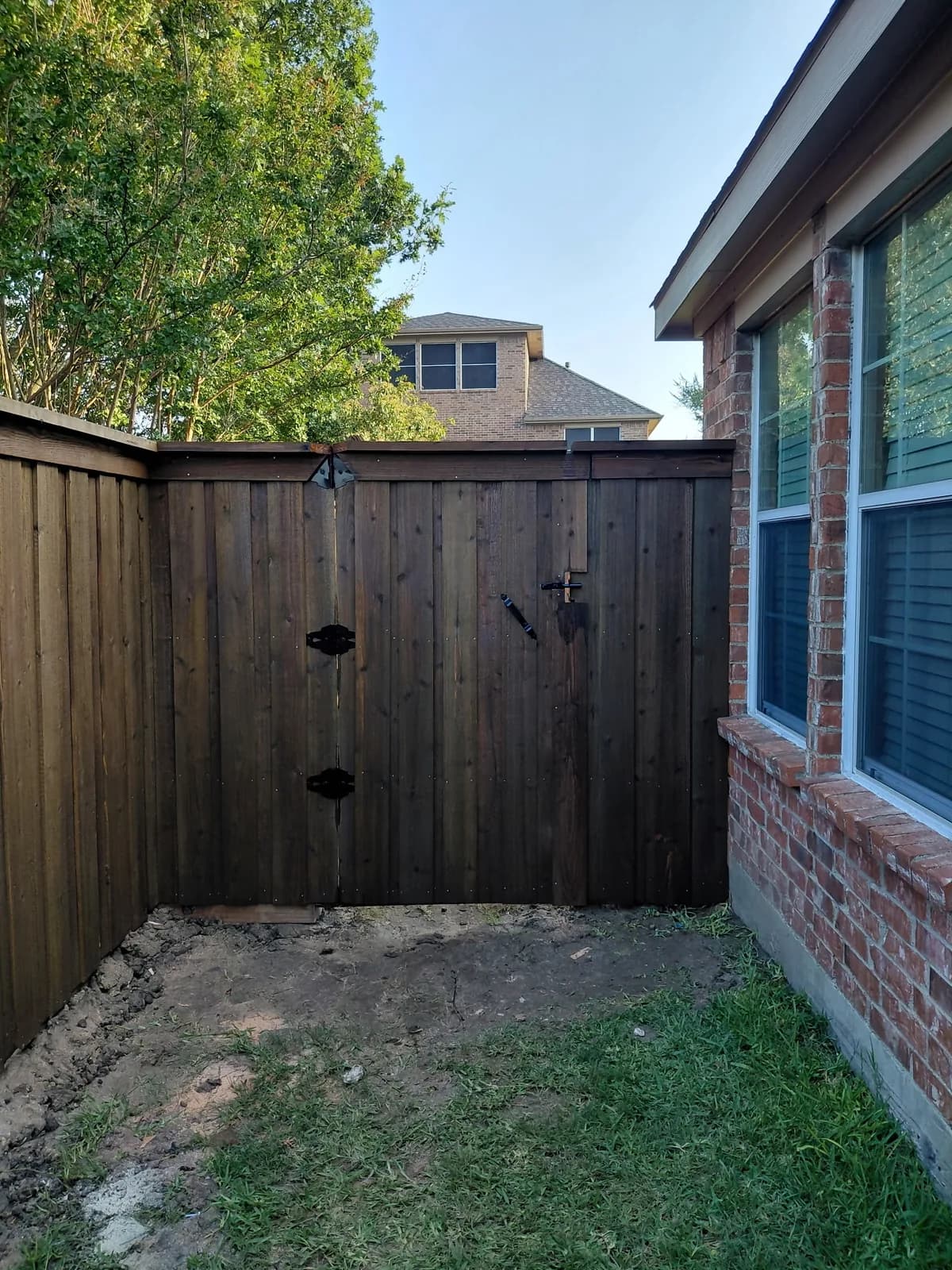
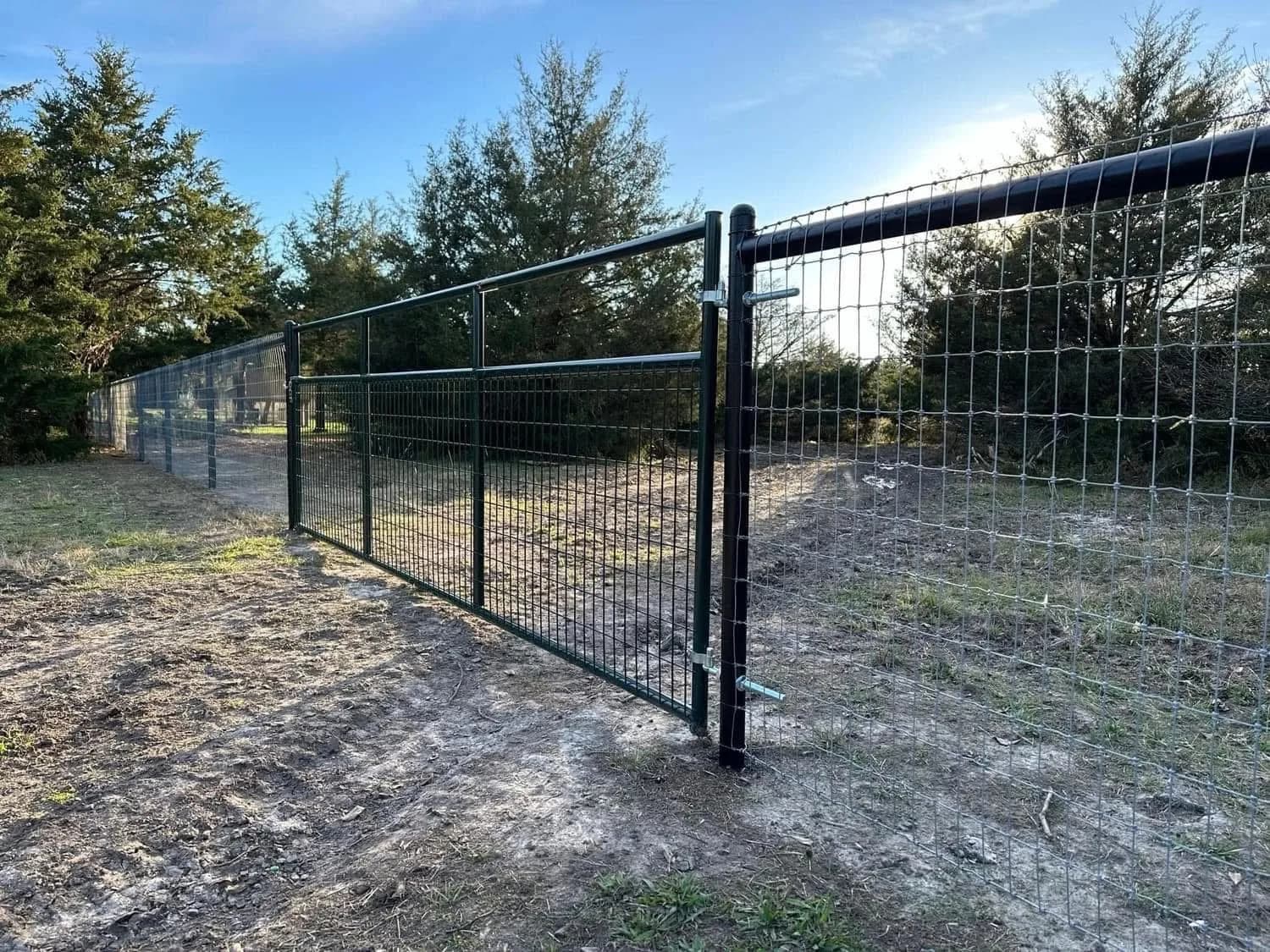
Walk gates, double gates, and drive gates, framed so they stay square.
What it covers
Cedar and iron gates, steel gate frames, heavy hinges and latches, drive gates, automation prep and conduit, repair of sagging gates.
The detail
How it's built.
Every fence failure we get called about starts at a gate. It's the one section carrying its own weight on two hinges while somebody swings it a few thousand times a year.
The fix is structural: a welded or heavily braced frame that holds square, hinges rated well past the gate's actual weight, and a latch that still lines up after the posts have been through a wet season and a dry one.
If a drive gate might ever be automated, the time to run conduit is while the trench is already open. Retrofitting it later means digging up what you just finished.
Everything else in a fence stands still. Build the gate accordingly.
What goes wrong
A gate is the only part of a fence with moving parts and the only part touched every day. Built from the same light material as the fence panels, it racks out of square and starts dragging within a season. Gates need a frame, not just pickets on hinges.
Questions
- My gate drags. Can it be fixed without replacing the fence?
- Usually. Dragging is almost always the gate frame racking or the hinge post moving. Both are fixable in place, and neither gets better on its own.
- Can you prep for an automatic opener?
- Yes — conduit and a properly set hinge post while the work is open. Far cheaper now than after the concrete is poured.
Before you decide
Pressure-treated posts vs cedar
Are pressure-treated fence posts bad?
How long a cedar fence lasts
How long does a cedar fence last?
What drives the cost of a fence
Why do fence quotes vary so much?
Metal vs wood fence posts
Should I use metal or wood fence posts?
Fence height and permit rules
How tall can a fence be, and do I need a permit?
How long a fence takes to build
How long does it take to install a fence?
Also in fencing
Start here
Tell us what you want built.
Send the details. We'll set up a time to come walk it.