
Fencing
Ornamental Iron
Steel or aluminum panel fence, set in concrete, for boundaries you want to see through.
What it covers
Panel and post installation, gates and hardware, pool-code spacing where it applies, powder-coated finishes, tie-ins to existing fence.
The detail
How it's built.
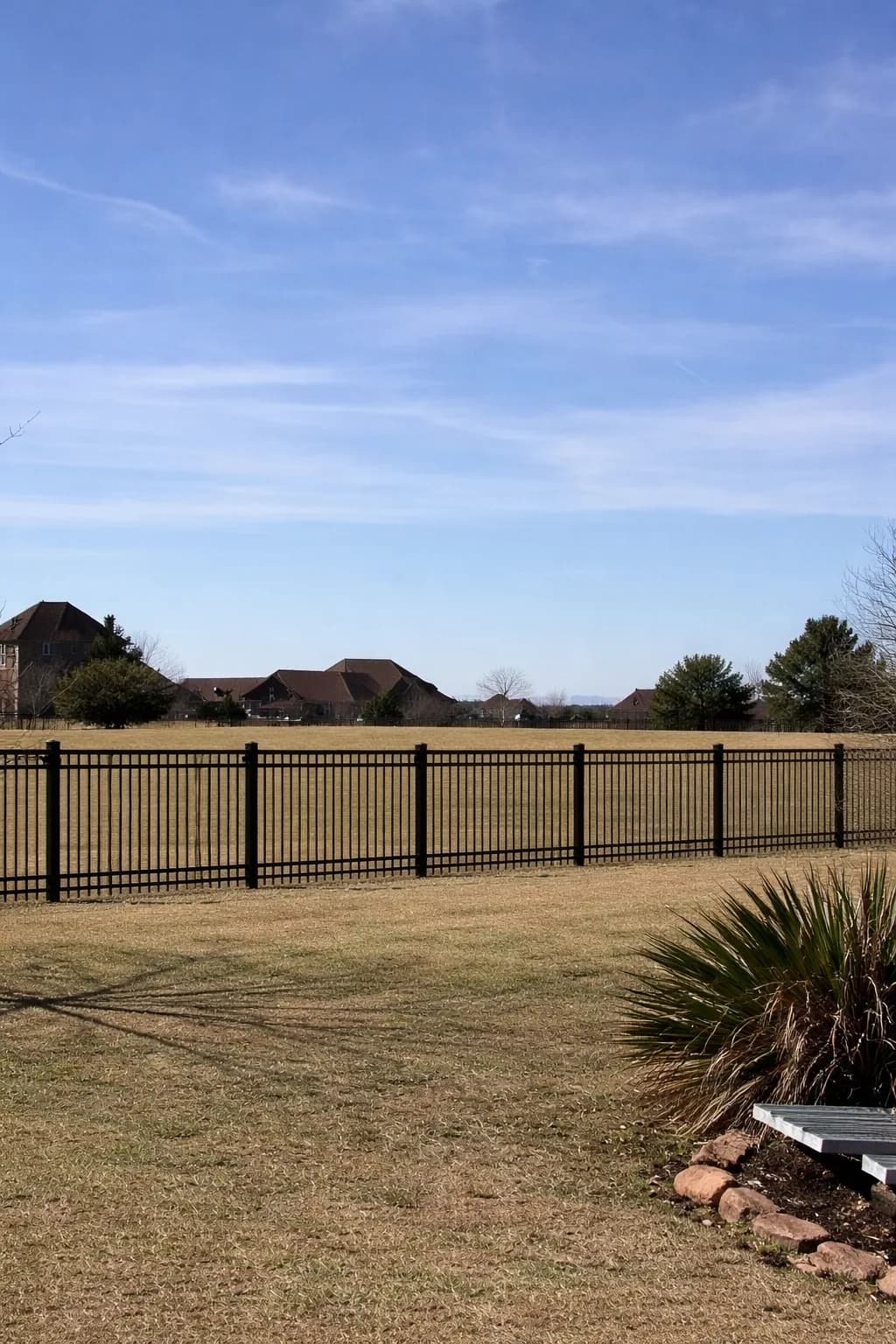
Iron is what you use when the fence should not be the view. Back onto a greenbelt, a pasture, or water, and a solid cedar fence buys privacy you didn't want at the cost of the reason you bought the lot.
It's also the honest choice for pool enclosures, where you need a barrier that a child can't climb and an adult can see through.
The failure modes are unglamorous: footings and finish. Concrete depth keeps it square, and the coating is the only thing between the steel and a Texas summer.
Some fences are for privacy. This one is for everything else.
What goes wrong
Iron fails at the ground and at the welds. Set posts shallow and the whole run racks out of square. Skip the finish and every scratch becomes a rust line down the picket. On pool enclosures, spacing and gate hardware are not stylistic choices — get them wrong and it doesn't pass.
Questions
- Iron or aluminum?
- Steel is stronger and heavier. Aluminum won't rust. Which one is right depends on whether it's holding something in or just marking a line.
- Can it meet pool code?
- Yes, and it has to. Height, picket spacing, and self-closing latching gates are all specified. We build to what the code requires, not to what looks close.
Also in fencing
Start here
Tell us what you want built.
Send the details. We'll set up a time to come walk it.